
Primary Chapter II
Building proactive primary care.
Three years ago, I published the manifesto for what would become Primary. We wanted to build a new model of primary care practice, using technology to better serve doctors and patients.
Since then, we have been quietly building to turn that vision into reality. We have opened around ten clinics. Dozens of doctors have joined us. More than 150,000 patients have been seen and are now cared for in our clinics. We have built real care teams around our doctors, developed our own technology, and integrated AI directly into the patient journey.
But this is only the beginning.
Our ambition was never to build “beautiful” medical clinics. Even though we are proud of their design. Our ambition is to build a new model of primary care. One built around:
- Proactive medicine, whose goal is not simply to treat disease, but to help people live longer, healthier lives.
- Doctor + AI, where AI takes on a growing share of information, guidance and follow-up, under the supervision of a doctor.
- Care that remains human and grounded in the real world, centered around a primary care doctor and a team that knows its patients over time.
We have built the foundations of this model. Now it is time for the next step.
From treating disease to keeping people healthy
Primary care today is still largely focused on treating disease. Something goes wrong. The patient books an appointment. The doctor diagnoses and treats. Then everyone goes back to their lives until the next problem arises.
This model has delivered extraordinary progress. But it remains fundamentally reactive: we intervene once a problem already exists.
The next major transformation in medicine will be the shift from a system primarily designed to treat disease to one designed to keep people healthy for as long as possible.
Not waiting for disease to appear, but identifying risks early enough to act. Not focusing only on symptoms and treatments, but on what determines our long-term health: physical activity, sleep, nutrition, mental health and behavior. Not caring only for people when they are sick, but helping everyone take better care of their health over time.
A form of medicine that no longer asks only “What is wrong with you today?”, but also “What can we do today to help you still be healthy ten or twenty years from now?”
AI makes a new model of care possible
Proactive medicine requires the ability to support patients over time: gathering information, tracking indicators, explaining, reminding, following up, and identifying when a situation requires intervention. For a doctor responsible for thousands of patients, this was previously almost impossible.
AI fundamentally changes this constraint.
It is far more than a productivity tool. It makes it possible to do at scale what doctors rarely have time to do between appointments: explain, listen, support, remind and follow up.
Patients are already using AI to understand a test result, ask about a symptom, prepare for an appointment or seek initial guidance. But most of these interactions currently happen outside the care pathway, disconnected from the doctor who actually knows the patient.
While AI can replace some interactions that previously required a doctor's time, it does not remove the need for a doctor who remains responsible for the patient's care. The challenge, therefore, is to integrate AI into the care pathway and build a new loop: doctor + patient + AI.
Doctor + AI
At Primary, we started with a very concrete use case: pre-consultation. Before an appointment, our AI assistant talks with the patient, gathers relevant information and prepares the consultation.
Today, 80% of patients in our clinics prepare for their consultation this way.
The doctor meets the patient with part of the information-gathering already done and can focus their time on what truly requires their expertise: understanding, examining, deciding and explaining.
But this is only the first step. Between appointments, AI can:
- Explain a test result.
- Answer a question.
- Check whether an examination has been completed.
- Track how symptoms are evolving.
- Support a health goal.
- Remind a patient about a screening.
While always keeping the doctor in the loop.
This changes the doctor's role. The doctor no longer needs to be the only gateway to medical knowledge. Their value becomes even more concentrated on what lies at the heart of medicine: knowing the patient, examining them, navigating uncertainty, making decisions, providing reassurance and building a long-term health strategy with them.
The doctor decides and supervises.
AI supports and executes what can be executed.
Bringing this new model of medicine into the real world
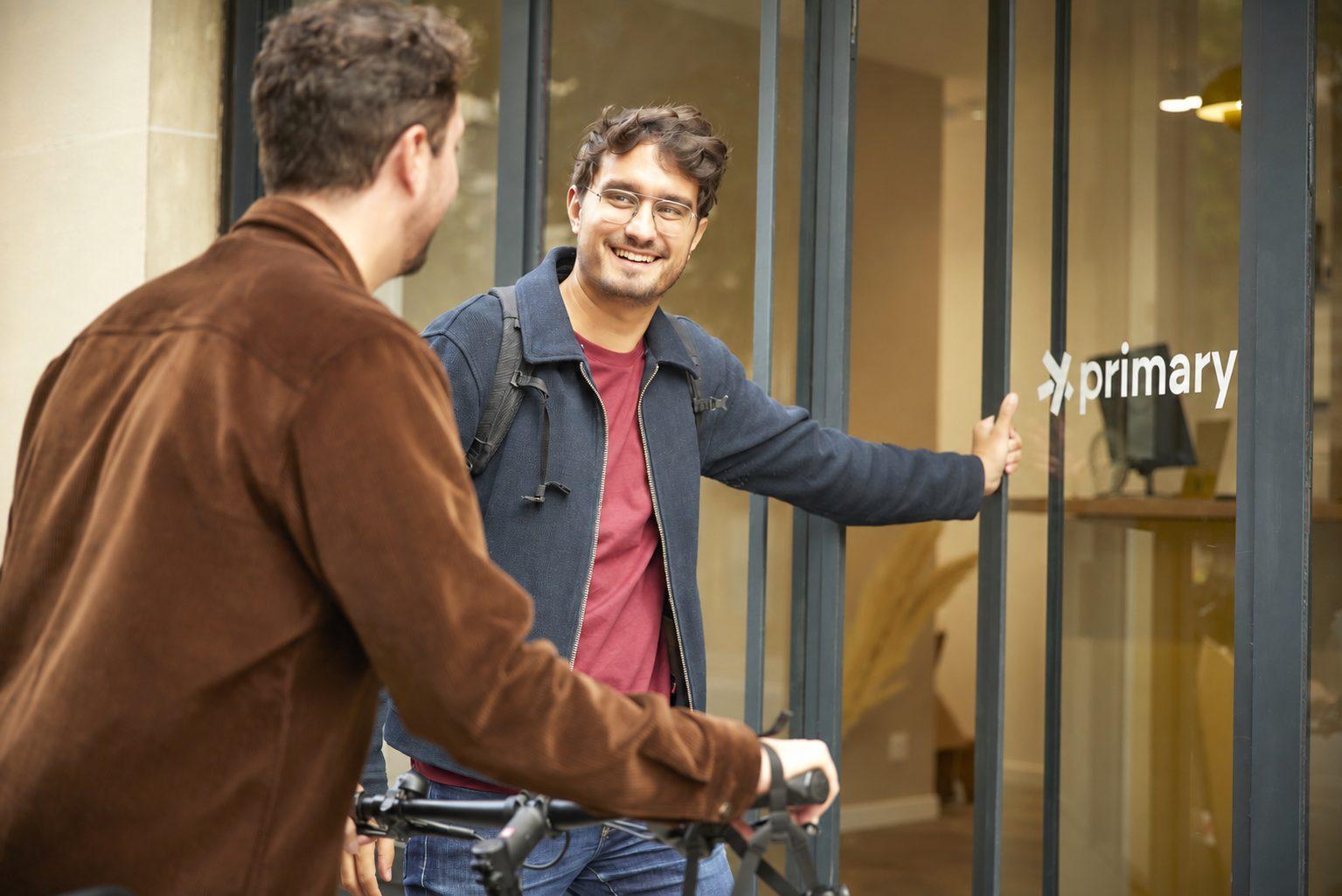
Another conviction sets us apart: digital alone will not be enough. Medicine will remain physical too. We will always need to be examined, reassured and cared for by a doctor who knows us and takes responsibility for our care. The goal, therefore, is not to make the medical clinic disappear, but to bring it into this new era.
That is precisely why we started by building a new generation of clinics. Together with doctors. They allow us to build and test this new model of medicine every day, in the real world, with real doctors and real patients.
Our clinics are not simply places where consultations happen. They are the infrastructure on which we are building this new model of care.
The next chapter of Primary
From day one, our ambition has been to transform primary care. We have spent three years building the infrastructure to make this new model possible. Our plan for the coming years is simple:
- 1. Build the clinics: the physical and human infrastructure for a new model of primary care.
- 2. Build the AI care team: combine doctors, care teams and AI to give every patient greater access and support.
- 3. Build continuous care: move from episodic appointments to an ongoing relationship, with care coordinated over time under the responsibility of the patient's primary care doctor.
- 4. Make proactive medicine the new standard of care: scale this model to help millions of people live longer, healthier lives.
First in France. Then across Europe.